
A great pair of jeans never really leaves the wardrobe. The wash, the size, the way they fit better the more you wear them.
Which is exactly the problem. Most categories ask the customer back every season. Denim asks far, far less. That single fact shapes everything about how you merchandise it.
This week, I talk about Levi’s. First, some highlights from the earnings results and the a trip to the shop floor.
The numbers were good and the floor was better.
Let’s dive in.
What The Earnings Said
The call was, of course, upbeat.
Revenue up. Inventory down, with the excess and obsolete cleaned out. DTC now sits at 51% of revenue. AUR is rising, and management tied that to full-price selling. Leadership also credited in-store execution and presentation with getting customers into the store and shopping.
Two moves seem to be doing the trick: first, the head-to-toe assortment strategy and second, a push towards premiumization.
We have a case here of merchandising execution, outfitting, and an elevated pricing strategy.
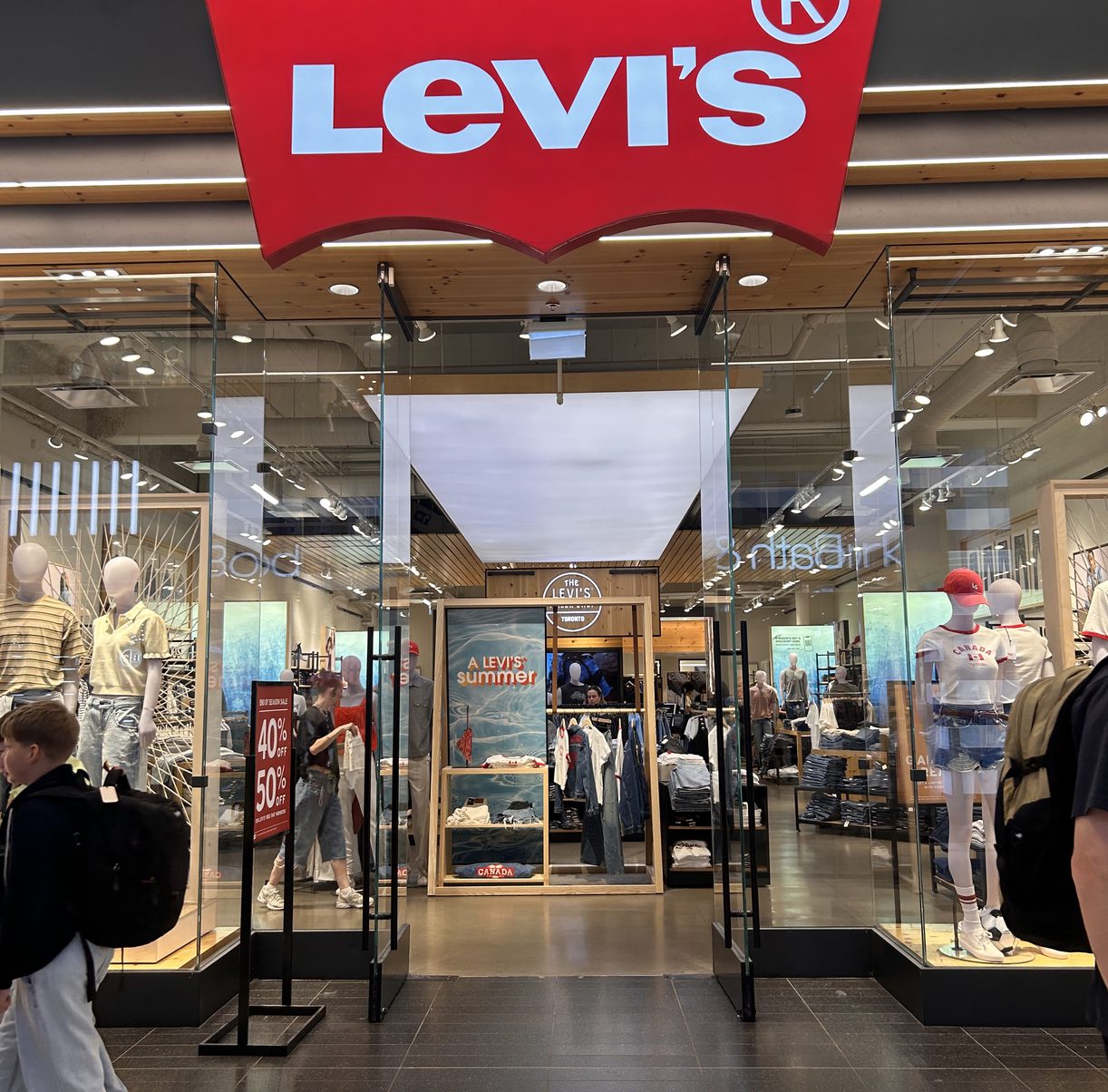
I like the sound of that. Now, let’s go to the shop floor and see for ourselves at the Levi’s location at Toronto Eaton Center.
What I Saw In Store
We are in sale season and discounting is not surprising. What wasn’t expected was that Levi’s didn’t read like a clearance event. Full-price ranges sat beside promotions, which lets a customer build an outfit without leading with the lowest price. Every section of the store held that balance.
Signage was consistent without shouting. Every denim style was marked clearly and organized by fit, feature, wash, and size. Visual merchandising was tidy, and with folded denim. Looping back to earnings results, women’s white denim was up 70% in the quarter and management credited in-store presentation for it. Standing in the store, that tracks.
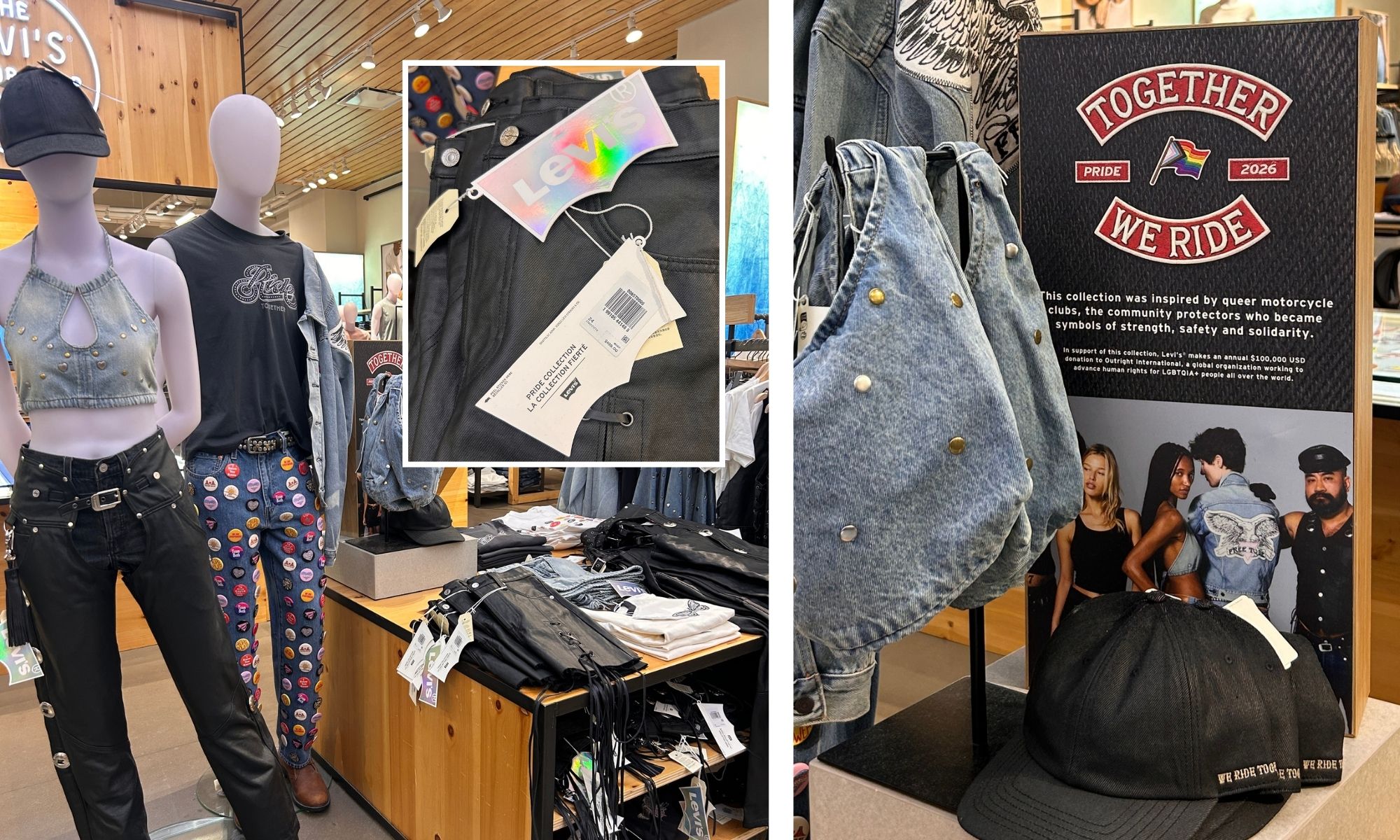
Marketing backed the merchandising. Take the Pride collection: garment details, signage, iridescent hang tags, all telling one story. That kind of alignment doesn’t happen at the end of a process.
It happens when merchants and marketers work together closely and early in the assortment build.
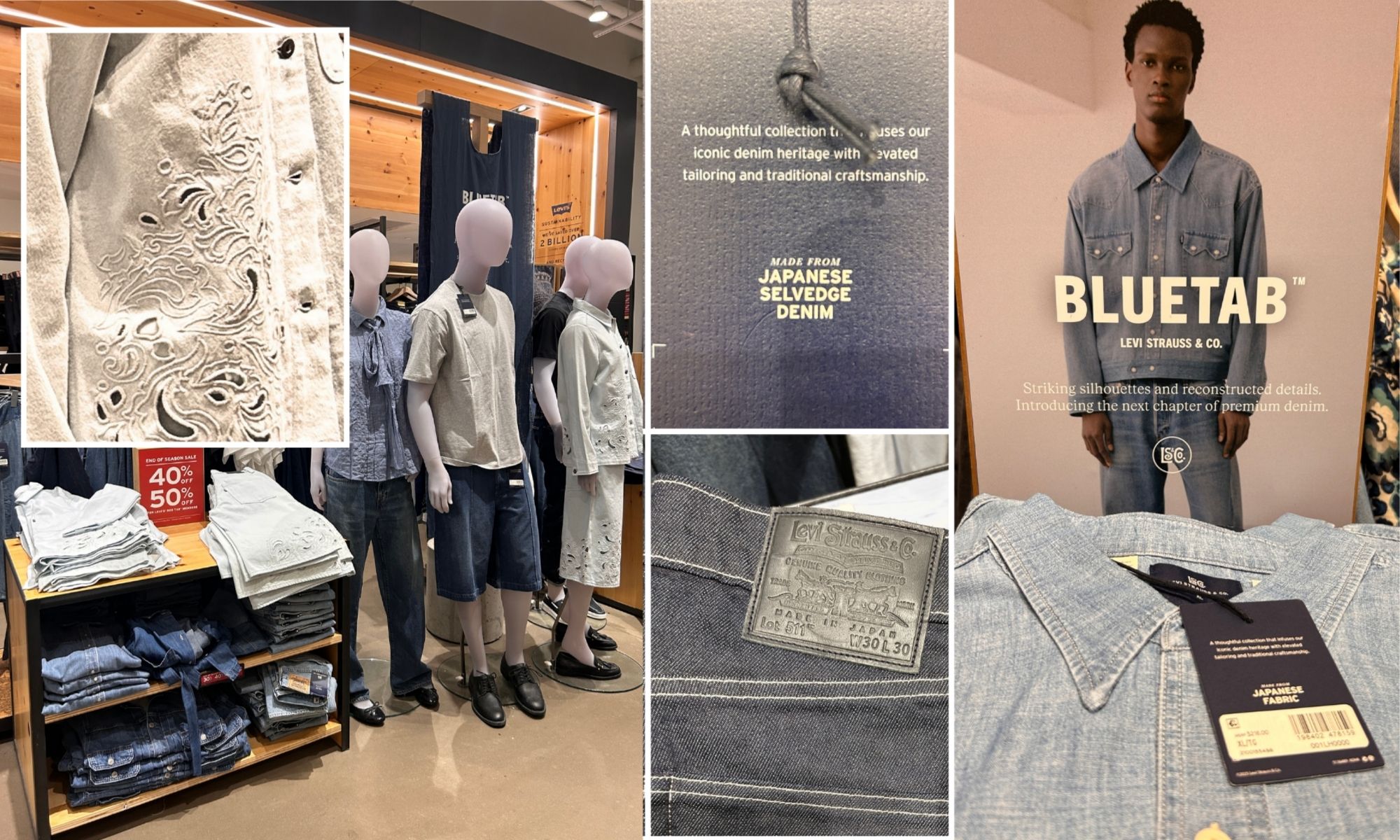
The head-to-toe strategy was clear throughout the store. Jackets, shirts, dresses, and accessories categories all represented. Complementary pieces, with outfitting choices anchored around denim core items, were abundant. Levi’s credits assortment expansion contributed roughly a third of top-line growth.
This is exactly how Levi’s captures customers beyond their perfectly fit 501s.
The Blue Tab’s premium assortment runs the same play, only elevated. Japanese denim, super soft fabrics, luxe trims, thoughtful design details like an embossed navy leather tab. The level of detail creates a clear distinction from the main line.
I did find the in-store product mix bottom-heavy, but the brand has already signaled that more tops are on the way.
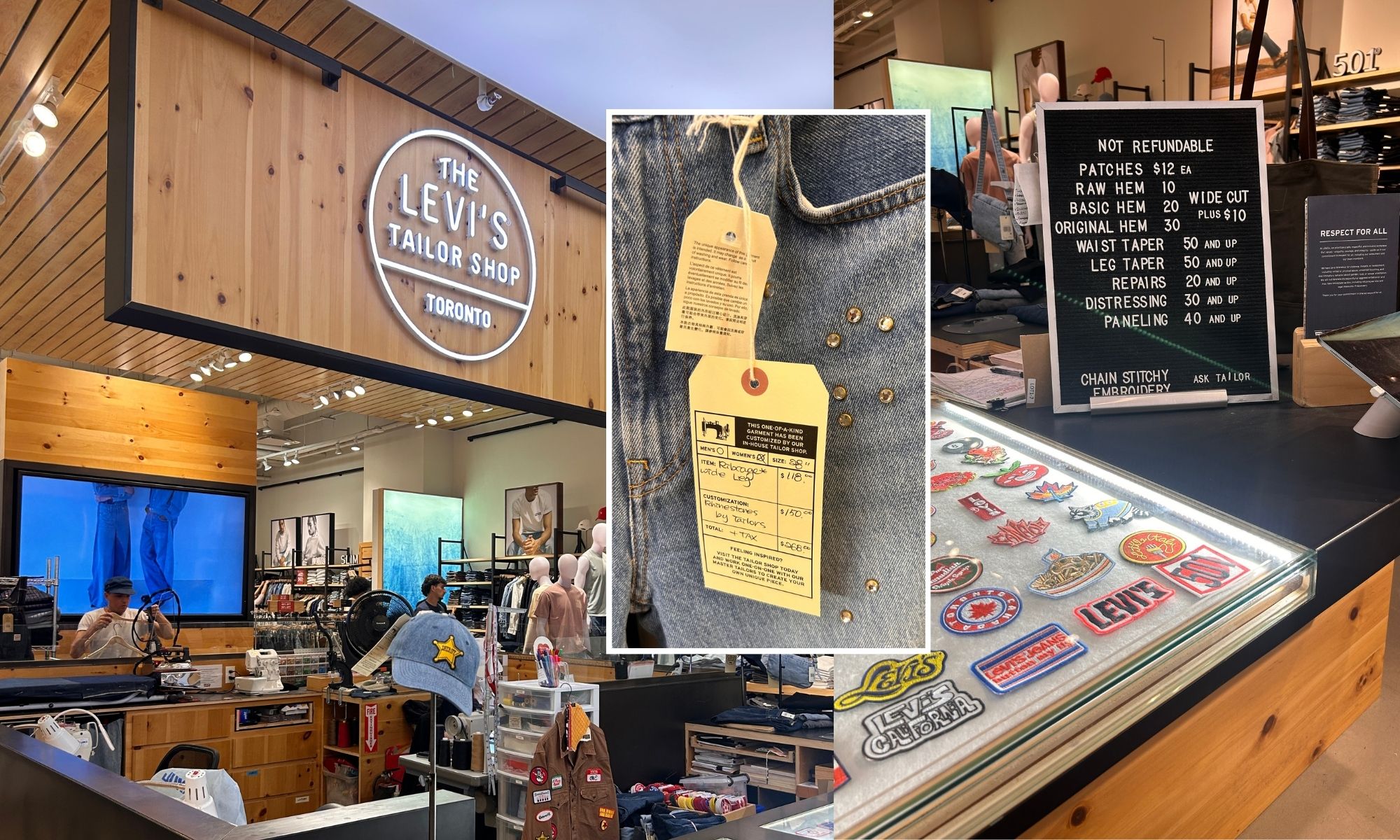
Next, the Tailor Shop.
The tailor shop is a well-placed service for customers whose body shapes are changing. It’s also a gateway for them to personalize their denim. FIFA team patches, embroidery, studs, buttons, etc., were all available for the customer to choose from. The store manager also told me that many customers who haven’t bought from them are coming in for tailoring.
This is also an rapid and proactive response to Fit Volatility. It’s still a commonly used contingent action, but it is available in plain sight for the customer.
A vintage Levi’s collection and a few one-of-a-kind pieces provides resale options. Denim gets better as it’s worn and this section shows you how.
My Levi’s Watchlist
Here are three things worth paying attention to based on what leadership is signaling and what I observed:
1 – Blue Tab Goes Wholesale. With DTC sitting at 51%, there is a good opportunity for thoughtful wholesale expansion. I predict Blue Tab exclusives with luxury specialty retail partners.
2 – Head-to-Toe in Color. More tops are coming, and I expect a heavier feminine skew, because that is where the category fight already lives. Outgoing CFO and Chief Growth Officer Harmit Singh told Yahoo Finance that Levi’s is expanding its color palettes and that he has already seen the first-half range. I am watching for material overdevelopment, the tax a brand risks paying for pushing newness into a category.
3 – The Premium Bet, With Premium Risk? The Blue Tab customer is less price-sensitive and worth chasing. But what I am watching out for is sizing discipline.
Here’s why. When I bought denim for Caban, I carried Levi’s at opening price and stacked True Religion, Rock and Republic, Seven, J Brand, Citizens, and Nudie above it. The highest price point was always the hardest to move. I bought the full size run knowing only the 26s and 28s would sell. The rest goes to markdown.
Denim bottoms can be very unforgiving on OTB, margin, and excess. Without size discipline, the markdown risk will show up fast, which quickly devalues an elevated assortment.
The signals right now are strong. Merchandising, marketing, and elevated premium offerings are all working.
Giving the customer a reason to buy more than just perfect-fitting jeans won’t be a problem for Levi’s.