
By Liza Amlani - October 1st, 2026
I walked into Simons in Montreal last week looking for the Adidas wide leg pant. I left without buying anything. Not because the product wasn’t there.
It was. But standing in front of that fixture, I couldn’t make a decision.
Which is exactly the problem. Here’s what I saw. The Adidas section was stocked with their signature stripe wide-leg pant.
Right next to it was a similar pant under the Twik brand, a Simons private label. Same silhouette. Same stripe detail. Similar fabrication.
The differences? The Adidas 3-stripe. And the price.
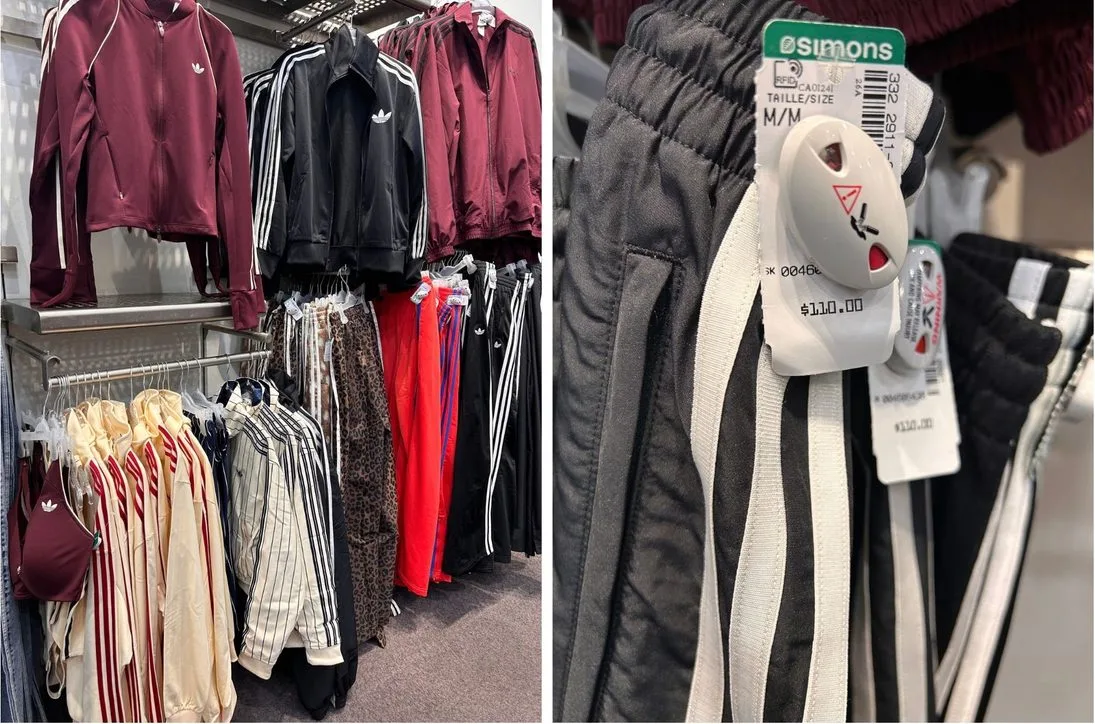
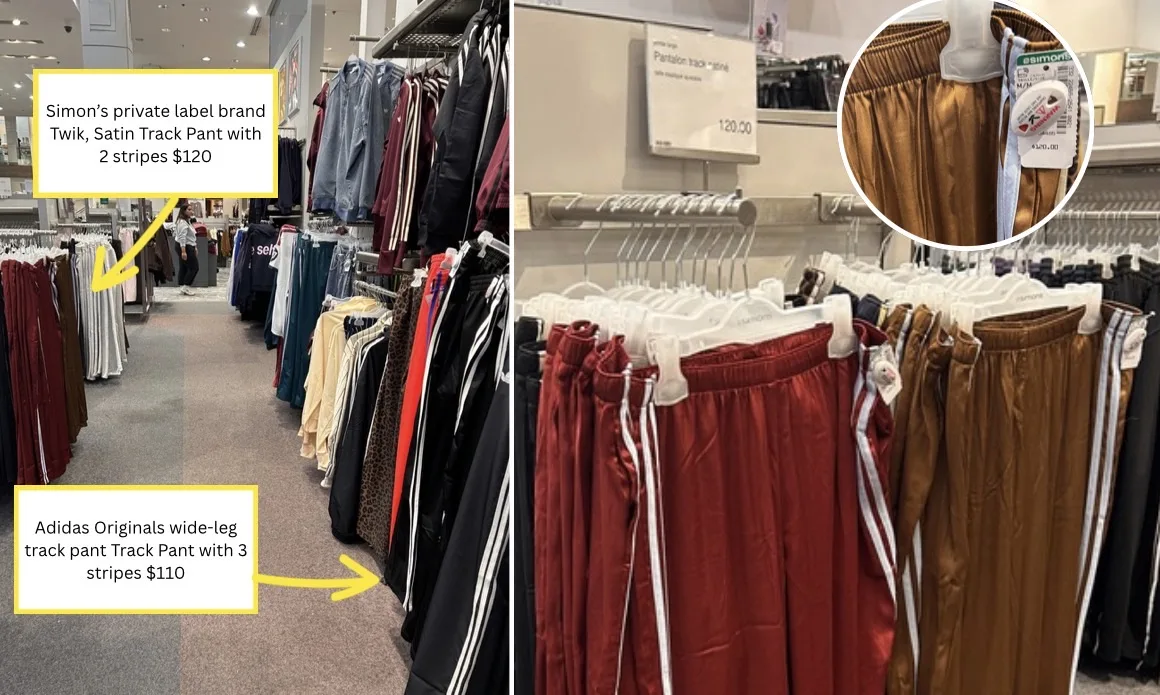
As I stood there between both racks, I wondered if the merchants had walked the floor and seen how the product was executed. I couldn’t find my size because of the stuffed fixtures and left the store frustrated.
That’s the adjacency tax.
When a retailer places two competing silhouettes side by side, they don’t give the customer more choice. They’re creating decision paralysis. And when customers can’t decide, they walk.
Both the retailer and the brand lose the sale.
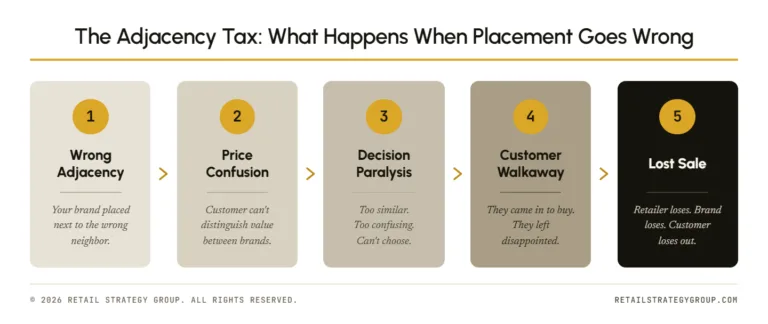
Adjacency is usually decided by the retailer. The brand doesn’t always have a say. But as we wrote in The Whole Sale, where your product lives on the shop floor directly impacts how the customer perceives your brand’s value. The wrong neighbor erodes your pricing strategy before the customer even picks up the product.
This is why negotiating placement upfront isn’t optional. Before your product hits the floor, you need answers to three things:
1 – Product Placement. Where is your product going to sit and how is the assortment merchandised around it? The wrong neighbor will impact your own brand identity.
2 – Pricing. What is the promotional cadence of the retailer? If the brand next to you is always on sale, your full-price product will look expensive by comparison, even if the value is there.
3 – Accountability. What is the joint marketing strategy? Will there be dedicated signage, brand ambassadors, or sales associates directing customers to your collection? Having only two of the three in place is not enough.
The shop floor is a merchandising decision. Treat it like one.
If your brand isn’t executed with your brand POV, the wrong fixtures, the wrong neighbors, or the wrong context, it will show up in your end of season excess or markdowns.
By then, the damage is already done.
I’ll leave you with two things:
For brands: Negotiate the adjacency before you sign the contract.
For retailers: Walk your shop floor. Make sure your private label brands don’t cannibalize the sales of your third-party brands.
The wrong adjacency doesn’t just cost Simons.
It costs Adidas too.